Green School Chair
Object / With BYO Living / In progressSpec
Kind: object
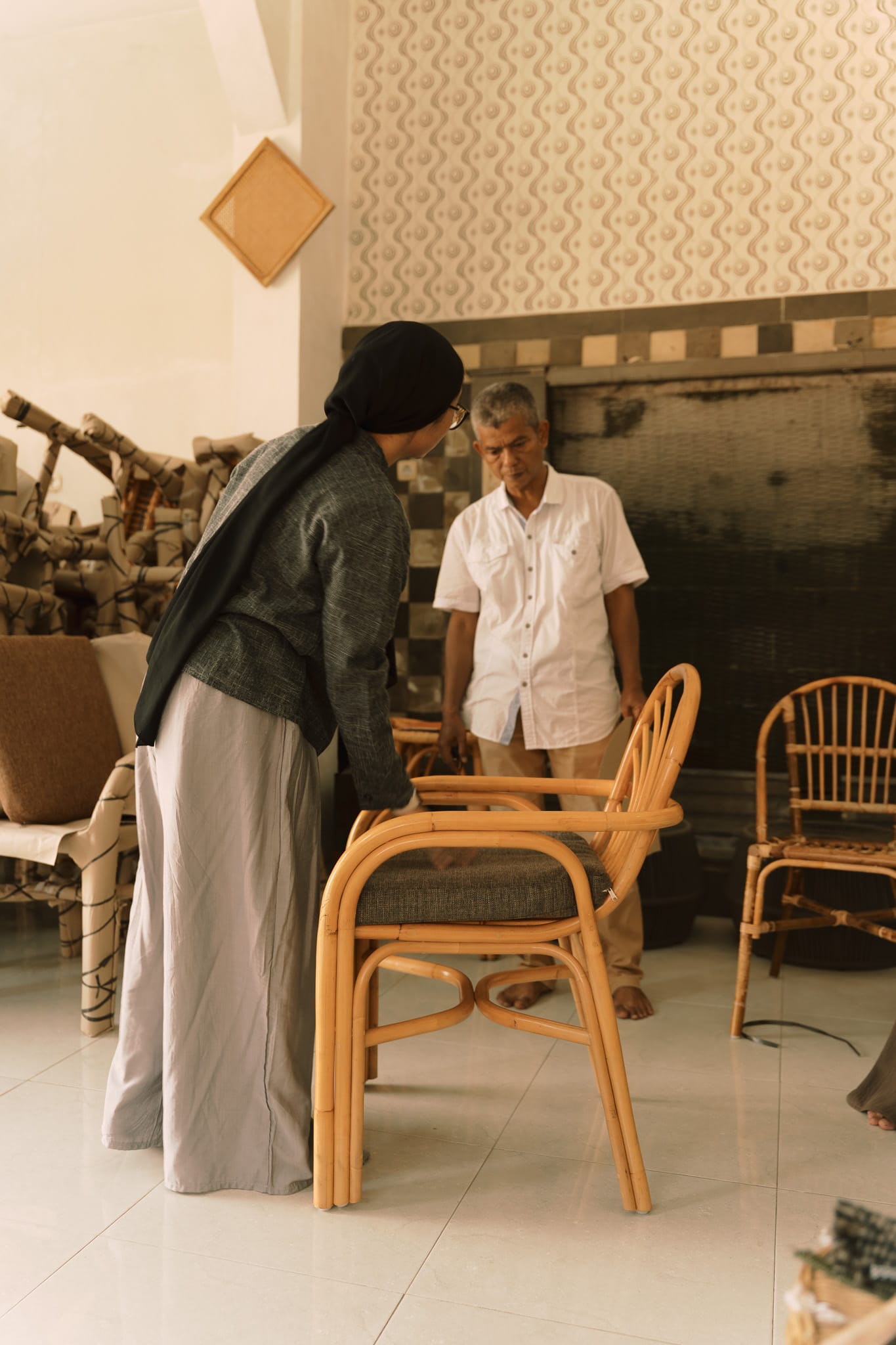
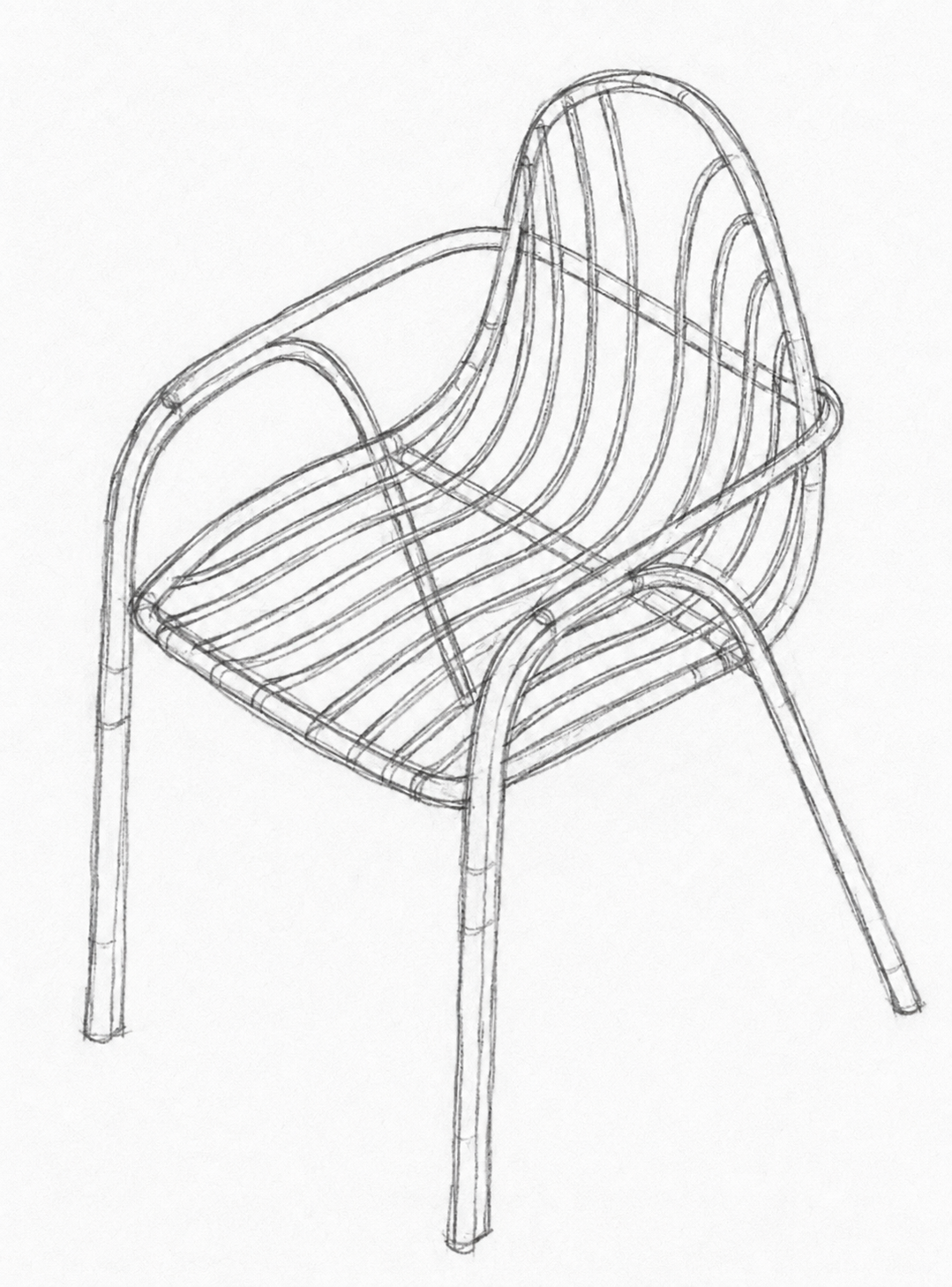
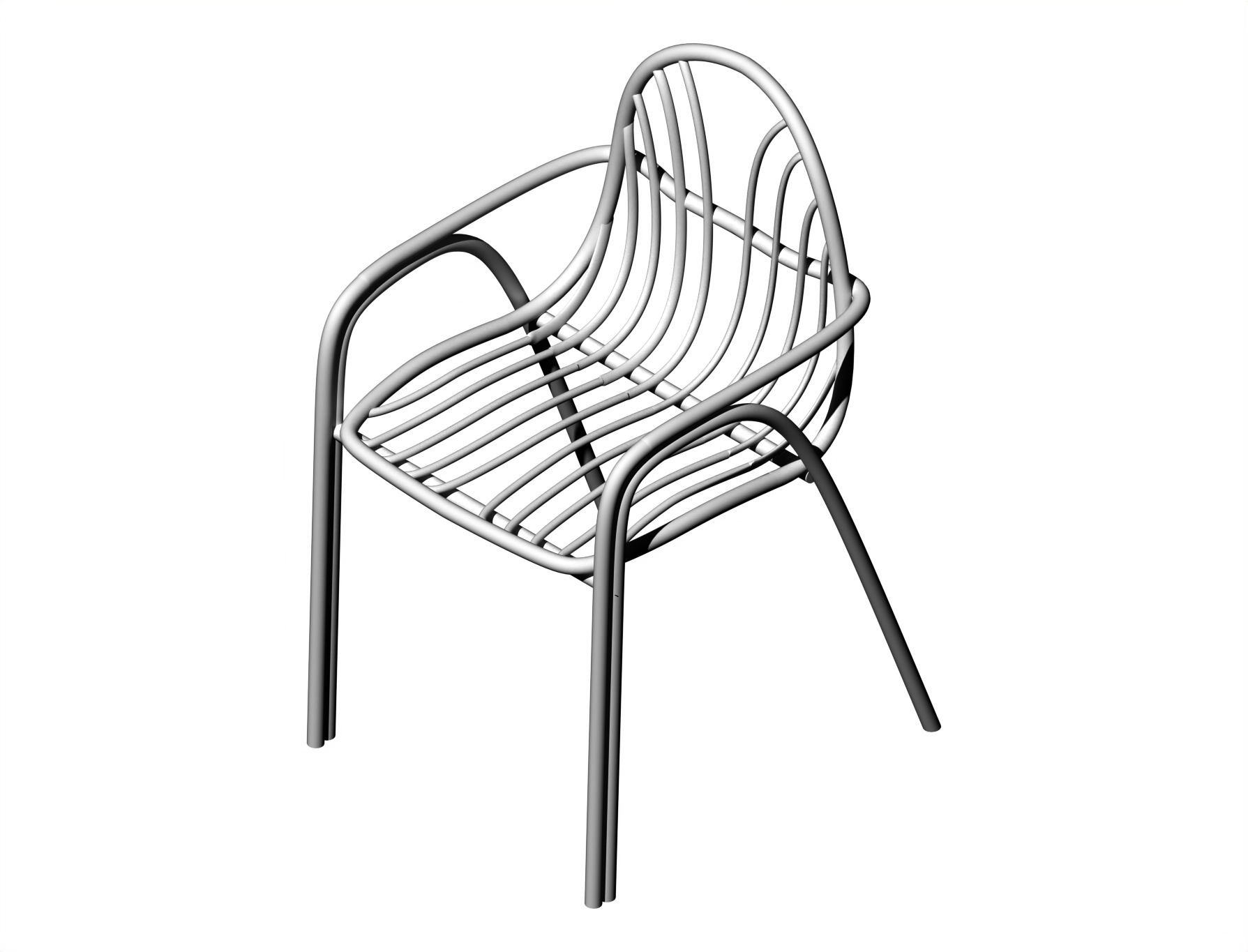
The Green School Chair is designed by Bronwen Main and made by BYO Living from agroforestry rattan grown in Kalimantan. The cushions are cut from recycled fabric and filled with upcycled denim waste, zipped so the covers come off for washing. Prototyped in 2025 and refined in trial at the school, the chair is now in production as a run of fifty.
In Kalimantan, rattan is farmed inside standing forest. Dayak farmers have run a rice and rattan rotation for centuries, a practice reaching back more than four hundred years along the Mahakam river: a cleared plot grows rice for a season or two with rattan seedlings planted among the crop, and when the farmer moves on, the young palms are left to climb up through the returning forest, becoming a kebun rotan, a rattan garden.[^1] These gardens read as forest by most measures that matter. Studies of rattan agroforests in Katingan record tree diversity approaching natural forest, with farmers managing the canopy deliberately for the climb, keeping trees whose crown form and branch strength suit the cane.[^2] A rattan harvest is an argument for keeping the canopy standing.
The gardens are under pressure. Comparing land uses in East Kalimantan, oil palm out-earns everything else per hectare and rattan gardens come second, though measured as return on a farmer's labour the rattan is the more attractive crop.[^3] Years of low cane prices have left many gardens barely managed.[^2] Researchers describe the gardens as a low-carbon growth option for the region, and warn that the knowledge needed to run them is passing away with the older generation.[^4] Buying cane from these gardens is a vote in that contest. Every chair pays a grower to keep a piece of forest working, which is the quiet argument woven into this one.
Threads
Agroforestry Furniture (Bronwen's furniture lineage)
Stand Trees (provenance)
Sources
Rotinsulu (2014), The potential of rubber agroforestry for rattan cultivation in Katingan Regency
Credits
Design: Bronwen Main
Fabrication: BYO Living
Contact
Interested in the chair? Write to bronwen@mainfrank.com.


Connections